

Crypto University logoCrypto University
NewsDictionaryGuidesCoursesReviewsToolsDeals
Log In
Log InRegister

Browse

  • News
  • Dictionary
  • Guides
  • Courses
  • Reviews
  • Tools
  • Deals

Explore More

  • Blog
  • Signals
  • About Us
  • Community
  • Affiliates
  • FAQs

Crypto University

Definitions, guides, reviews, and tools designed for decisions you can defend.

Library

NewsDictionaryGuidesReviews

Network

Our StoryAffiliate ProgramPartner DealsCrypto ToolsGet in Touch

Legal & Connect

PrivacyTerms of Use

Join the Community

Educational content only. Not investment, tax, or legal advice. Verify details with primary sources before making decisions. © 2026 Crypto University.

  • Dictionary
  • Guides
  • Courses
  • Reviews
  • Deals

Go Back to Crypto University Blogs

No Adverts are available

Funding Rate: Cost Of Perpetual Futures In Crypto

Crypto University • 18 February 2026

blog
Dictionary
No Adverts are available

In the fast-paced world of crypto derivatives, understanding every mechanism is crucial for success. Among the most critical yet often misunderstood concepts is the funding rate, a unique feature of perpetual futures that directly impacts your trading costs and profits.

The funding rate is a regular payment exchanged between long and short position holders in a perpetual futures contract. Its primary purpose is to keep the perpetual contract's price closely aligned with the underlying asset's spot price, preventing large and sustained deviations.

Why it matters

  • Cost of Carry: Directly impacts the profitability of holding perpetual futures positions over time.
  • Market Sentiment Indicator: A positive funding rate often signals bullish sentiment, while a negative rate suggests bearishness.
  • Arbitrage Opportunities: Creates opportunities for traders to profit from price discrepancies between perpetual futures and spot markets.
  • Risk Management: Essential for traders to factor into their risk assessment and position sizing.
  • Liquidity Provision: Encourages market makers to provide liquidity by incentivizing them to balance long and short exposure.

How it works

  1. Price Discrepancy: When the perpetual futures price deviates from the spot price, a premium or discount emerges.
  2. Funding Rate Calculation: Exchanges calculate the funding rate based on the difference between the perpetual contract's price and the spot price, often using an index price.
  3. Payment Mechanism: If the perpetual price is higher than the spot price (positive funding rate), longs pay shorts. If the perpetual price is lower (negative funding rate), shorts pay longs.
  4. Periodic Exchange: These payments occur at fixed intervals, typically every 8 hours, directly between traders without involving the exchange as a counterparty.
  5. Price Convergence: The act of paying or receiving funding incentivizes traders to open positions that push the perpetual price back towards the spot price.

Example with realistic numbers

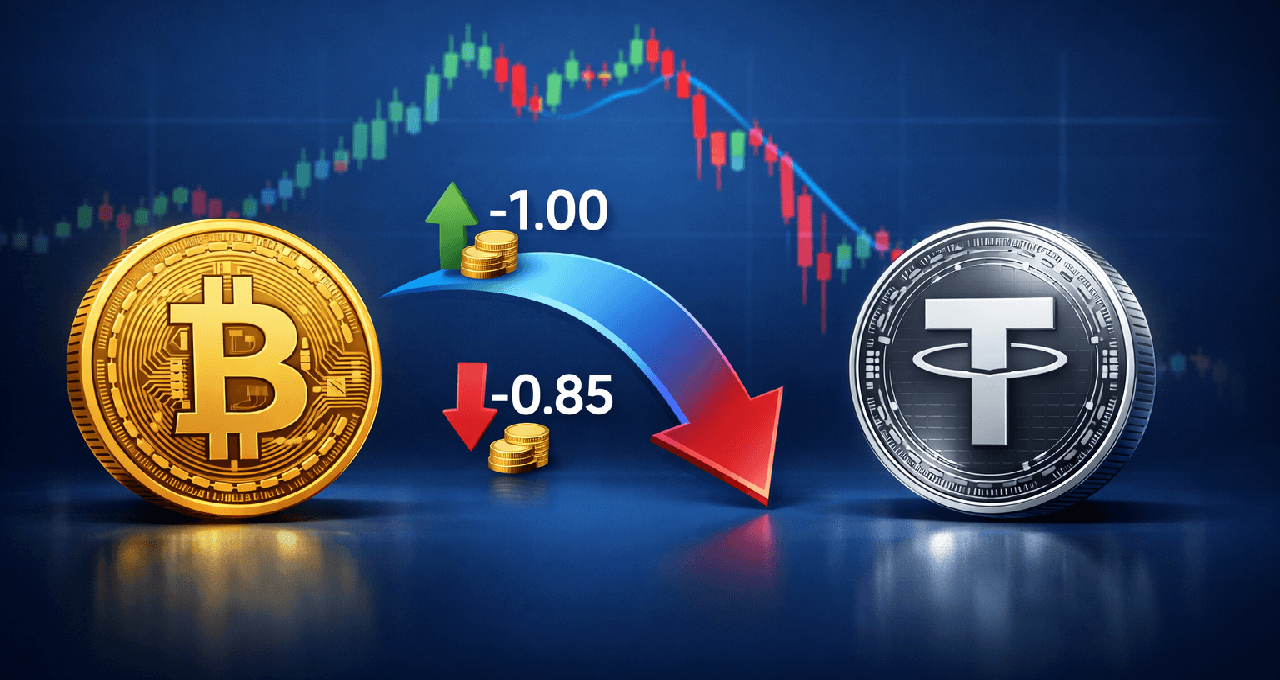
Consider a Bitcoin (BTC) perpetual futures contract on an exchange. The current BTC spot price is $60,000. Due to strong bullish sentiment, the BTC perpetual futures contract is trading at $60,100. The exchange calculates a positive funding rate of +0.01% for the next 8-hour interval.

  • Long Position Holder: A trader holding a $10,000 long position will pay $10,000 * 0.0001 = $1.00 to short position holders.
  • Short Position Holder: A trader holding a $10,000 short position will receive $1.00 from long position holders.

This payment incentivizes more traders to open short positions or close long positions, pushing the perpetual price down towards the spot price, and vice-versa if the funding rate were negative.

Common mistakes

  • Ignoring Funding Costs: Underestimating the cumulative impact of funding payments on long-term position profitability.
  • Misinterpreting Rate Direction: Assuming a positive rate always means the market will go up, or a negative rate means it will go down, without considering other factors.
  • Not Adjusting Strategy: Failing to adapt trading strategies based on significant or sustained funding rate changes.
  • Overleveraging: High leverage amplifies funding costs, potentially leading to faster liquidations during adverse funding periods.

Quick checklist

  • Understand how funding rates are calculated on your chosen exchange,e.g. a leading crypto exchange Bybit.
  • Monitor funding rates for your open positions regularly.
  • Factor funding costs into your trade entry and exit strategies.
  • Consider funding rate trends as a market sentiment indicator.
  • Be aware of how leverage impacts your funding obligations.
  • Explore strategies like basis trading to potentially profit from funding rate differentials.

Related terms

  • Perpetual Futures
  • Spot Price
  • Index Price
  • Basis Trading
  • Derivatives
  • Leverage

FAQs

Q: What is a positive funding rate?

A: A positive funding rate means that traders holding long positions pay traders holding short positions. This typically occurs when the perpetual futures price is trading above the spot price.

Q: What is a negative funding rate?

A: A negative funding rate means that traders holding short positions pay traders holding long positions. This usually happens when the perpetual futures price is trading below the spot price.

Q: How often are funding rates paid?

A: Funding rates are typically exchanged every 8 hours, though the exact interval can vary by exchange.

Q: Who pays the funding rate?

A: The side of the market (longs or shorts) that is driving the perpetual contract's price away from the spot price pays the other side.

Q: Can funding rates be used as a trading indicator?

A: Yes, funding rates can serve as a sentiment indicator. Consistently positive rates may suggest bullish sentiment, while consistently negative rates may indicate bearish sentiment.

Q: Do all crypto exchanges have funding rates?

A: Funding rates are a feature of perpetual futures contracts, which are offered by many, but not all, crypto derivatives exchanges. Spot trading does not involve funding rates.

No Adverts are available

Share Posts

Copy Link

staging.cryptouniversity.networkblo...

No Adverts are availableNo Adverts are availableNo Adverts are available
Blog testing Top 10 Public Companies Holding the Most Bitcoin in 2026
Crypto University•19 March 2026

Blog testing Top 10 Public Companies Holding the Most Bitcoin in 2026

A deep 2026 guide to public-company Bitcoin treasuries: top holders, why they hold BTC, how to verify disclosures, and how to interpret the risks.

Guides
News testing Total Value Locked (TVL): Understanding a Key DeFi Metric
Crypto University•19 March 2026

News testing Total Value Locked (TVL): Understanding a Key DeFi Metric

Understand TVL in DeFi, how its calculated, and why it matters.
Guides
Guide testing Crypto Slippage Explained: What It Is and How to Avoid It
Crypto University•19 March 2026

Guide testing Crypto Slippage Explained: What It Is and How to Avoid It

Understand crypto slippage and its impact. Learn causes and strategies to minimize it in volatile markets.

Guides